Best AI Website Builders in 2026, and Who Each One Is For
Search "best AI website builder" and you'll find lists of fifteen tools, all with glowing reviews. Not much use when you just want a site live by Friday.
This is a shorter list, sorted by what each tool is actually good at. Fair warning: we make PageHub, and it's on here. We've described the others by what they're built for instead of picking them apart, and we've left prices out because they change every few months. Check each vendor's pricing page before you commit.
First, work out which kind of tool you need
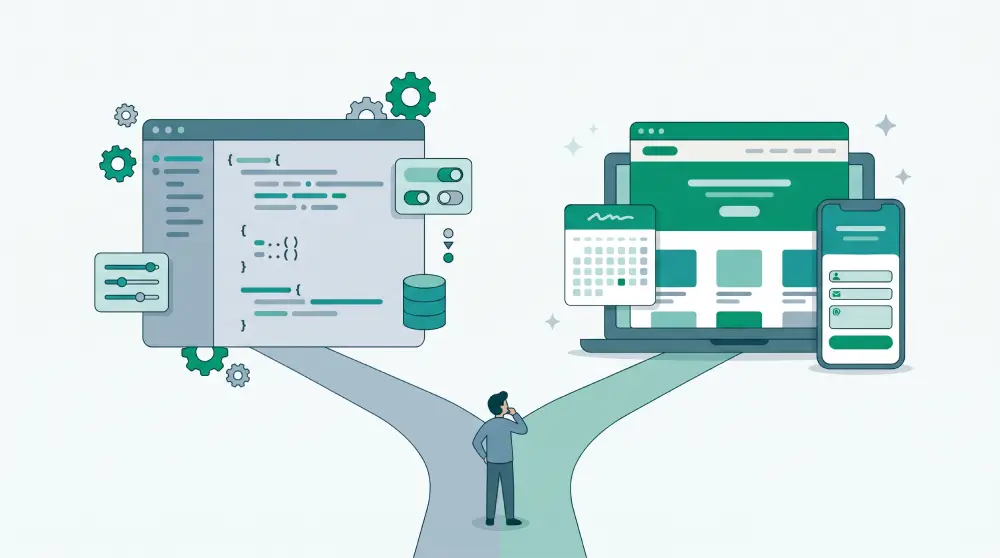
"AI website builder" now gets slapped on three fairly different things:
- Website builders with an AI head start. You describe the business, get a site, then edit it like any builder.
- Hosting companies that bundle a builder with your domain and hosting.
- AI app builders that write actual code. Powerful, but made for software, not for your salon's website.
Most builder regret comes from picking the wrong category, not the wrong brand.
What matters when you compare
The first draft is the least important part. Every tool spits out something decent in thirty seconds now. The differences show up afterwards.
Can you edit it without a fight? Click a headline, change it, done. Being able to open the HTML when the editor won't cooperate is a nice bonus.
Can you ask the AI for changes? "Make the pricing section less stiff" or "add a FAQ about delivery" will save you more time than the first generation ever does.
Will it still fit in six months? If you'll want a shop, bookings, a blog or a second language later, check now. Moving to another builder is a miserable weekend.
Are the SEO basics built in? Page titles, meta descriptions, share images, a sitemap. You shouldn't have to go plugin hunting for these.
The AI website builders people search for most
These names come from the related searches for "ai website builder" on Google Trends over the past year.
Wix
The big, established option. Its AI site generator chats with you about your business and hands over a starting site, which you finish in the regular Wix editor. The real draw is the ecosystem: a huge template library and an app market for almost anything.
Makes sense if you want the well-known option with the most add-ons.
Hostinger
A hosting company first. Its AI builder comes alongside its hosting plans, which is handy if you want domain, email and website on one bill.
Makes sense if you want a simple site in a cheap all-in-one package.
Framer
Designers love Framer, and you can tell. It began as a design tool, and its strength is detailed visual control and animation. The AI can generate pages, but you'll get the most out of it if you enjoy fiddling with layouts.
Makes sense if design is the whole point and someone on your team has the eye for it.
Durable
Aimed at small businesses and solo service providers who need a basic site quickly, with a few small-business tools around it.
Makes sense if you need something online fast and don't plan to customise much.
Lovable
Not really a website builder. Lovable is an AI app builder: you describe an application and it writes the code. Brilliant for building a product, but overkill (and a maintenance job) if what you need is a site for your clinic. We went into this in more detail in Lovable vs an AI website builder.
Makes sense if you're building software and are fine owning the code.
PageHub
This one's ours, so read it with that in mind.
PageHub is for businesses whose website needs to do something: sell, take bookings, collect leads. You describe the business, answer a few questions, and the AI builds the whole site. After that you can edit three ways: click and type in the visual editor, work in the HTML, or point at one section and ask the AI to change only that.
The difference is what's already there when you start. An online store with variants and invoices. Bookings with capacity limits that can't double-book. A leads board for form submissions. A blog with search previews. Eight languages, including Arabic. Agencies also get a workspace per client and white label.
You can also say "make it look like example.com", and it'll take that site's colours, fonts and spacing as a starting point without copying any of the content.
Makes sense if you want your store, bookings or lead tracking in the same place as your site, or you build sites for clients.
Is a free AI website builder good enough?
For trying things out, yes. "Free AI website builder" is one of the fastest-growing searches in this category, and nearly every tool lets you start for free.
The catch is usually one of these: no custom domain, the builder's logo on your pages, a cap on pages, or very little AI usage. Fine for a test, awkward for a real business. Compare the plan you'll actually end up on, not the cheapest one on the pricing page.
How to choose in 15 minutes
Write two sentences about your business and what you want visitors to do. Paste the same text into two or three of these tools. In each one, change a headline, add a section and ask the AI to rewrite a paragraph. Whichever felt least annoying is probably your answer, because you'll spend far more time editing than generating.
If PageHub makes your shortlist, you can try it free.