Rubs that print their salt on the label, and a planner that counts back from dinner.
Pick a cut and a weight. The planner gives you the grams of rub, the smoker temperature, a range of hours that already includes the stall, the internal temperature to pull at, and the time the meat has to go on if you want to eat at six.
Every hour on this site is an estimate. The thermometer decides when it is done. We blend in Nashville on Mondays and ship Tuesday to Thursday, so nothing sits in a hot truck over a weekend.
Where the long cooks come from
Tap a red cut to plan itThe clock gets you to the right afternoon. The thermometer tells you when to pull it.
Two briskets of the same weight can finish three hours apart. What they will not do is disagree about temperature. These are the numbers that matter, from the line below which food is not safe to the point where a brisket gives way under a probe.
Food-safety figures are USDA minimums. Brisket at 203°F is 58 degrees past safe; you take it there to melt the collagen, which is also why it cannot be rushed.
What most people come back for
The brisket rub, the oak it is meant to be smoked over, and the sampler for anyone not ready to pick.
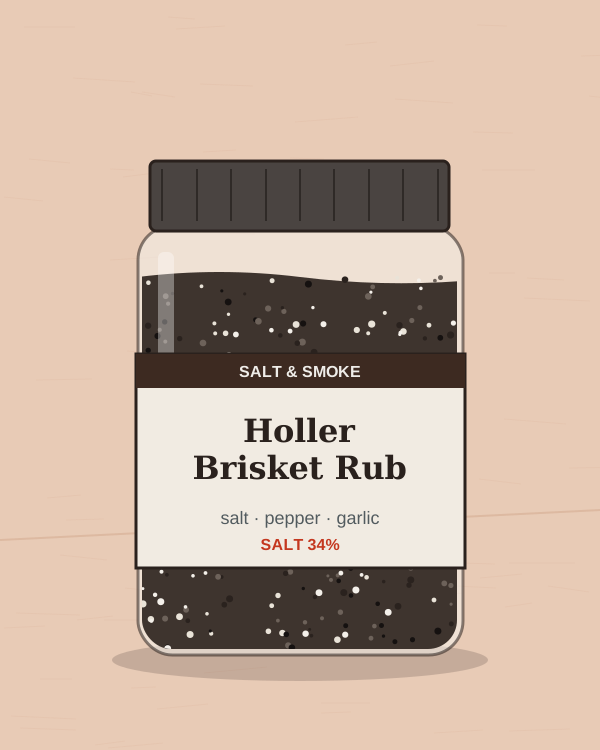
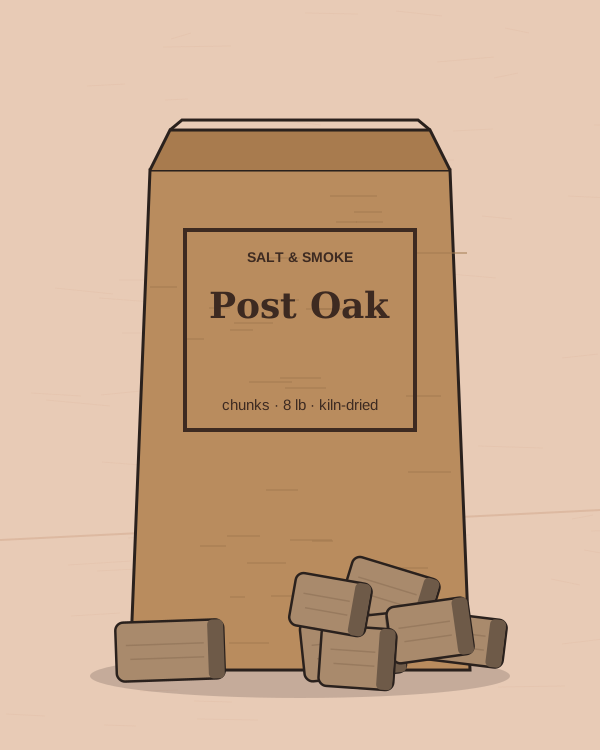
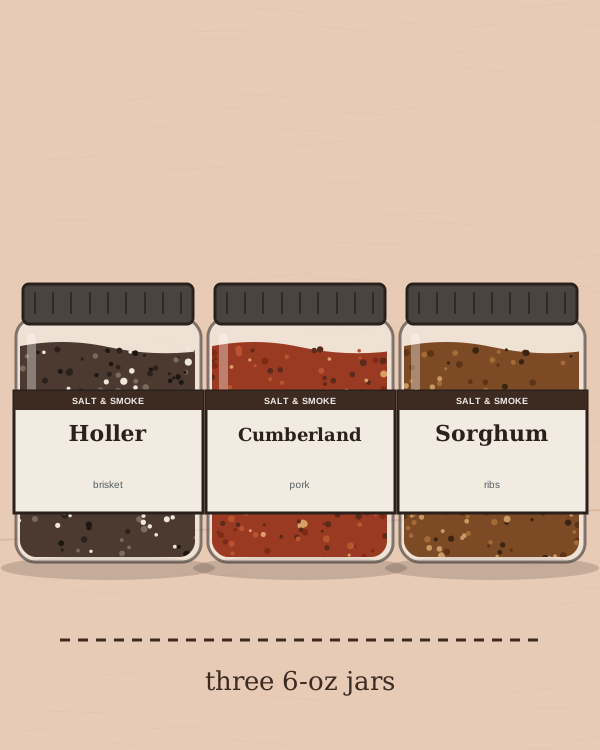
A 14-pound brisket for a six o'clock dinner
This is exactly what the planner prints for a whole packer at 250°F, wrapped in butcher paper once the bark sets. It plans with the long end of the range, 12 to 15 hours, because a brisket that is done early can wait in a cooler and one that is late cannot be hurried.
Change any of it: the weight, the pit temperature, whether you wrap, what time people are sitting down.
Plan your own cook- 1:00 PMthe day beforeRub on. 112 g of Holler Brisket Rub, then uncovered in the fridge overnight.
- 12:00 AMdinner dayLight the smoker. An hour to settle at 250°F with thin blue smoke.
- 1:00 AMdinner dayMeat on. Probe in, lid shut.
- 5:00 AMdinner dayThe stall, roughly. Between hours 4 and 9 it parks at 150–170°F.
- 7:00 AMdinner dayWrap in paper once the bark no longer smears.
- 4:00 PMdinner dayOff at 203°F, rest two hours in a dry cooler.
- 6:00 PMdinner daySlice and serve.
If the probe says 203°F at 1 PM, it is done at 1 PM. The cooler holds it above 140°F for three to four hours.
How much of the jar is salt
Most supermarket rubs are a third salt or more and do not say so. That matters, because if you dry-brine first and then use a salty rub, you have salted the meat twice. Ours print the figure on the jar. If you would rather salt separately, the salt-free rub is the same blend without it.
Grams per pound is what the planner uses. It is enough to coat, not to crust.
| Rub | Salt | Sugar | Per lb of meat | Best on |
|---|---|---|---|---|
| Holler Brisket | 34% | 0% | 8 g | Brisket, plate ribs |
| Ancho & Coffee | 28% | 6% | 8 g | Chuck, tri-tip |
| Cumberland Pork | 22% | 30% | 7 g | Shoulder, baby backs |
| Sorghum Rib | 20% | 34% | 12 g | Spare ribs, chicken |
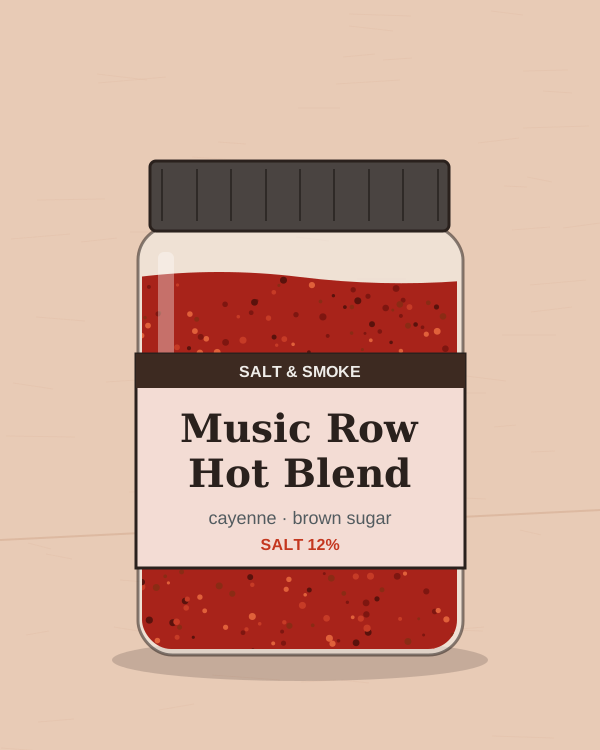
| Music Row Hot | 12% | 18% | 4 g | Wings, fried chicken |
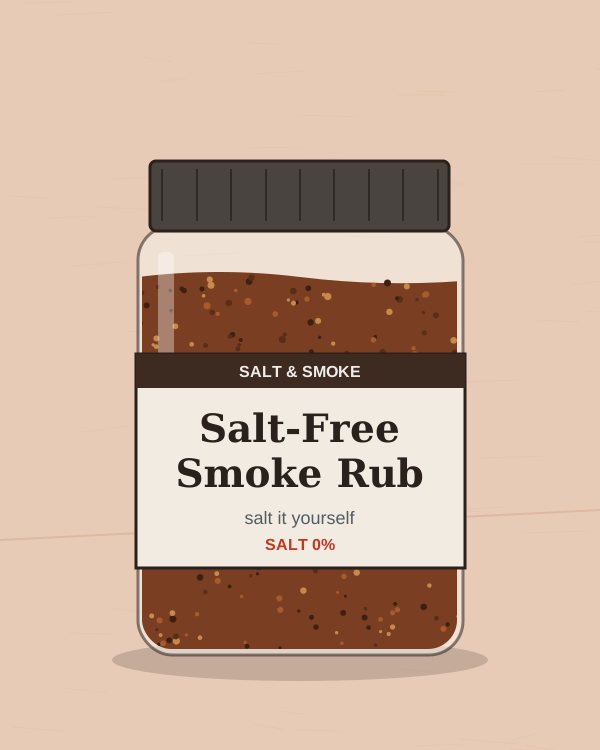
| Salt-Free Smoke | 0% | 22% | 7 g | Anything you salted yourself |
Newest on the shelf
Blended this season. Each one went through about thirty test cooks before it got a label.
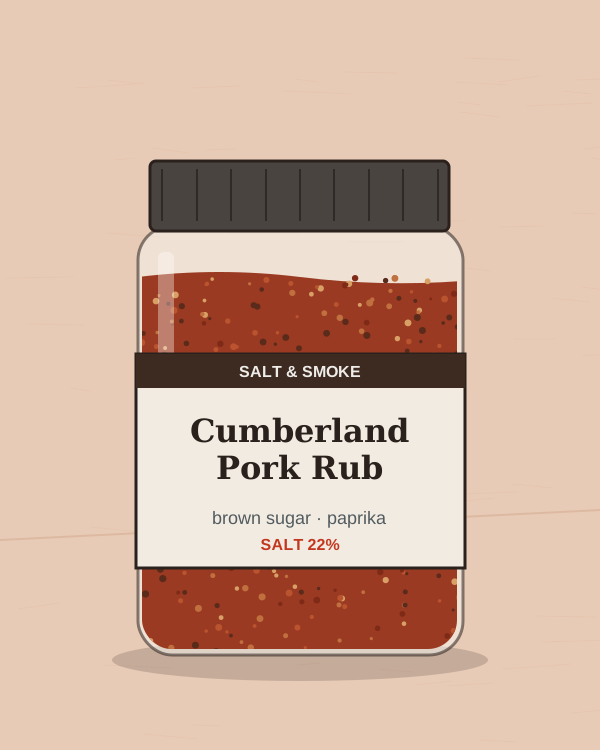
When to buy less from us
We would rather you finish a jar than throw half a bag away in the spring.
You smoke four times a summer
Buy one 6-oz jar. A brisket uses 112 g, a pork shoulder 56 g. The 1-lb refill bag goes flat on the shelf long before you reach the bottom of it.
You cook on gas or a pellet grill
Skip the 8-lb chunk bags. Chunks need a live fire to smoulder. A 3-lb bag of chips in a smoker box is all a gas grill can use, and pellet grills burn their own pellets.
You want heat
Only Music Row is properly hot. Everything else is seasoned for flavour and suits children. If you add cayenne to a sweet rub at home, use a quarter teaspoon per pound and taste it.