Seed that grows true, in packets sized for a backyard bed.
Open-pollinated vegetables and herbs, most of them grown on four farms in the Willamette Valley. Every lot is germination-tested before it is packed, and the result is printed on the back of the packet.
Tomatoes and kale go in indoors from mid-February. Peas go straight outside in early March.

A Portland kitchen garden, in the order it goes in
Dates are counted back and forward from the last frost, which is why the planner asks for yours. These are the ones we use on Division Street.
- Mid-February
Tomatoes and kale start indoors, eight weeks ahead of the frost. A south window is not enough light; a shop light two inches above the tray is.
- Early March
Peas go straight into the bed. Cold soil slows them down and does them no harm. Basil and lettuce start indoors.
- Late March
Carrots, beets and the first radishes go in outside. Kale seedlings move out under a row cover.
- Late April
Once the frost has passed: tomatoes out, then bush beans and zucchini sown where they will grow.
What we would plant first
The varieties we grow ourselves on Division Street, picked because they ripen in a short, cool Oregon summer.
All seed and supplies
'Stupice' Tomato
$4.25
'Provider' Bush Bean
$4.00
Kitchen-Garden Starter Collection
$24.00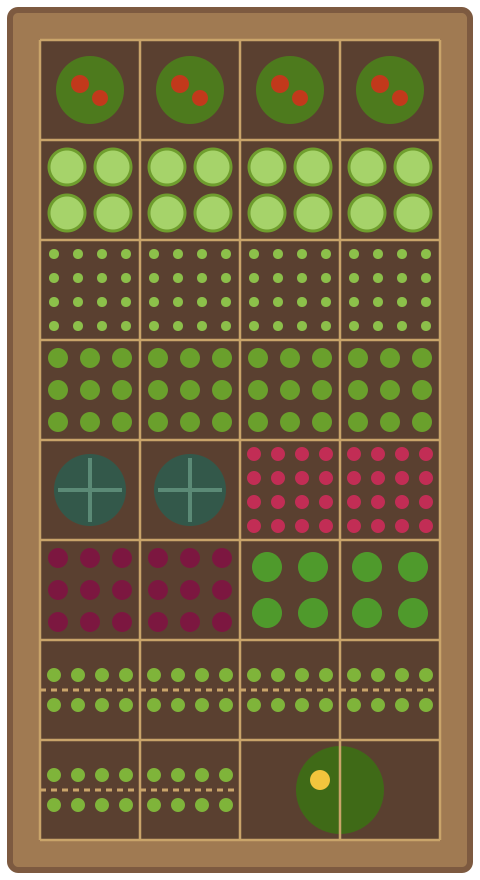 A 4 × 8 ft bed, one-foot squares
One packet of each is usually plenty
Here is a common first bed worked through square by square. Thirty of its thirty-two squares are planted, and not one crop needs a second packet.
| Crop | Squares | Plants | Seeds you sow | Seeds in a packet |
|---|---|---|---|---|
| Tomato, staked | 4 | 4 | 8 | 30 |
| Lettuce | 4 | 16 | 32 | 800 |
| Carrot | 4 | 64 | 96 | 400 |
| Bush bean | 4 | 36 | 44 | 60 |
| Snap pea, on a trellis | 6 | 48 | 58 | 75 |
| Kale | 2 | 2 | 4 | 200 |
| Radish | 2 | 32 | 39 | 250 |
| Beet | 2 | 18 | 18 | 150 |
| Basil | 2 | 8 | 16 | 250 |
| Nine packets | 30 | $32.00 bought one by one | $27.75 with the collection | |
“Seeds you sow” already allows for thinning and the odd gap. The leftovers keep: three years for carrot, lettuce, beans and peas, four for tomato, kale and beet, five for radish and basil. Our bed planner runs the same sums for your own bed size and tells you if any crop needs a second packet.
Just packed
New lots in from this year's harvest, tested and dated.
Who grows it
Seed is a crop in its own right: the plants are left standing for weeks after you would have eaten them. These are the people who do that for us.
Oak Hollow Farm
Corvallis, OregonTomatoes and zucchini. Fruit is picked dead ripe, fermented for three days and dried on screens.
Two Creeks Growers
Scio, OregonPeas and bush beans, threshed by stamping on a tarp, which is still the gentlest way to do it.
Marrow Lane
Silverton, OregonKale, beets and carrots. All three take two seasons to make seed, so these lots are a year in the making.
Our own beds
Division Street, PortlandLettuce and radish, grown in the half acre behind the shop. You can walk round it on Saturdays.
Basil comes from a grower in California's Sacramento Valley. Oregon summers are too short to ripen basil seed reliably, and the packet says where it was grown.
A short email when each window opens
Tell us your last frost date and we will write when it is time to start each crop: about six emails between February and June, then nothing until next year.