Toronto, Fri 5 to Sun 7 March 2027

Climate Data Jam

48 hours, 160 people and 11 cleaned datasets about heat, floods, energy and Lake Ontario. Build something a real person in this city could use on Monday.

CA$18,000in prizes, eight awards
1–4people per team, solo welcome
$0to enter, meals included
When
Friday 18:00 to Sunday 18:005 to 7 March 2027, Toronto time
Where
Lakeshore Data Commons410 Front Street West, Toronto
Who
160 participants, 18+About a third are usually first-timers
Cost
FreeSeven meals and snacks included
Figure above
Illustrative stripesThe measured Toronto record is in the Heat track

Four tracks, each with a question and the data to answer it

You pick one track when you register and can switch until Saturday 10:00. Every dataset is a cleaned snapshot frozen on 15 February, with a README, a data dictionary and its licence, so nobody spends Saturday morning fighting a broken API.

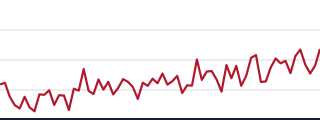
Line chart rising from about 6 to about 18 days per year at or above 30 °C between 1960 and 2025.
Days at or above 30 °C, 1960–2025

Heat in the city

Which blocks need shade and cooling first? Combine surface temperature with tree canopy and who lives there.

DatasetFormatSize
Daily weather, Toronto City station, 1840–2025CSV68,000 rows
Summer land-surface temperature, 2015–2025GeoTIFF3.1 GB
Tree canopy polygons, 2023GeoJSON210 MB
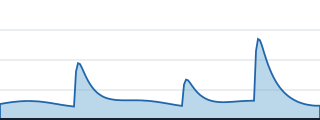
River level chart with three storm peaks, the last one the highest.
River level, 15-minute readings

Water and flooding

Can a household see a basement flood coming? Link river levels and rainfall to the flooding reports residents actually filed.

DatasetFormatSize
Don River gauge levels, 2002–2025CSV810,000 rows
Basement flooding service calls by wardCSV41,000 rows
Rainfall intensity curves, 1940–2025JSON2 MB
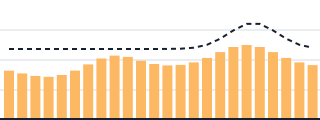
Hourly electricity demand bars peaking around 18:00, with a dashed carbon-intensity line peaking at the same time.
Grid demand and carbon intensity, one day

Energy and buildings

When should a building run its heat pump? Hourly grid carbon against building-level energy reports.

DatasetFormatSize
Ontario grid demand and carbon intensity, hourly, 2019–2025Parquet61,000 rows
Building energy and water reports, 2018–2024CSV23,000 rows
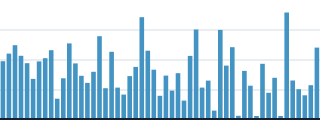
Bar chart of maximum winter ice cover per year since 1973, trending downwards with a few high years.
Maximum winter ice cover, 1973–2025

Lake and ecosystems

Is the beach safe to swim at today? Water temperature, ice and bacteria samples from the city's beaches.

DatasetFormatSize
Lake Ontario buoy water temperature, hourlyCSV390,000 rows
Great Lakes ice cover, 1973–2025CSV9,600 rows
Beach E. coli samples, 2008–2025CSV52,000 rows

That is 11 datasets across four tracks. You may bring your own data too, as long as you can publish it. Judges will ask where every number on your screen came from.

The 48 hours, and what is on right now

Times are Toronto time. The panel works out what is happening from the clock in your browser; before the weekend, drag the slider to see any hour.

Night, 23:00–07:00The hour shown in the panel

  1. Doors open, check-in and dinner

    Pick up your badge, a locker key and a plate. Vegetarian by default.

  2. Welcome and dataset briefings

    Ten minutes per track from the people who cleaned the data, then the code of conduct, read aloud.

  3. Team matching mixer

    Solo entrants are matched by skill and track. Teams lock by Saturday 10:00.

  4. Hacking starts

    The floor stays open all night. The quiet room opens at 23:00.

  5. Late snack

    Soup, fruit and something sweet.

  6. Breakfast

    Hot breakfast until 09:00.

  7. Mentor office hours

    Hydrologists, a city planner, two grid engineers and a data journalist, booked in 20-minute slots.

  8. Lunch
  9. Workshop: showing uncertainty honestly

    Error bars, ranges and how not to draw a confident line through noisy data.

  10. Dinner and halfway check-in

    Every team gets five minutes with a mentor to sanity-check scope.

  11. Late snack
  12. Breakfast
  13. Submissions open

    A repository link, a two-minute video and a one-page method note.

  14. Code freeze and lunch

    Late submissions are shown but not judged.

  15. Judging demos

    Five minutes per team at your table, then three minutes of questions.

  16. Finalists present and people's choice vote

    Eight finalists, four minutes each, on the main screen.

  17. Awards and close

    Doors shut at the 48-hour mark.

How projects are judged

Five criteria, weighted. A polished demo with made-up numbers will lose to a rough one that is honest about what its data can and cannot say.

Weights add up to 100%.

  1. 30%
    Honest use of data

    Sources cited, uncertainty shown, no claim the data cannot support.

  2. 25%
    Useful to a named person

    A tenant, a ward councillor, a building manager. You should be able to say who.

  3. 20%
    Technical execution

    It runs, it handles the messy parts, and someone else could rebuild it.

  4. 15%
    Clarity

    A stranger understands the chart in ten seconds.

  5. 10%
    Open and reproducible

    Public repository, open licence, a README that gets someone started.

Score a project the way judges do

Each judge gives every criterion 1 to 5. The weighted result is out of 100.

60out of 100

Prizes, in Canadian dollars

Eight awards. Prize money is split equally between the members of a team and paid by bank transfer within 30 days of the event.

  • Grand prizeBest project across all tracks
    CA$8,000
  • Heat in the cityBest in track
    CA$2,000
  • Water and floodingBest in track
    CA$2,000
  • Energy and buildingsBest in track
    CA$2,000
  • Lake and ecosystemsBest in track
    CA$2,000
  • Best first-time teamEveryone on the team is at their first hackathon
    CA$1,000
  • People's choiceVoted by participants on Sunday
    CA$1,000
  • Total prize pool
    CA$18,000

The fine print, up front

  • A project can win the grand prize or its track prize, not both. The track prize then goes to the runner-up.
  • You keep your code. To be eligible, publish it under any open licence; the data partners asked for that.
  • Code written before Friday 21:00 is fine as a library, not as your project. Judges check commit history.
  • Winners outside Canada are paid the same amount in CAD; your bank may charge to receive it.

Coming alone? Here is how we match you

About half of last year's participants arrived solo. Tell us what you are good at and which track pulls you, and see the kind of team the Friday mixer puts together. The people below are example profiles; your real teammates come from this year's list.

I'm coming
What I can do

What we provide, and what we don't

So you can pack properly and nobody finds out at 3 a.m.

Provided

  • Seven meals and two late snacksFriday dinner through Sunday lunch. Vegetarian by default; vegan, halal and gluten-free if you tell us by 26 February.
  • 24 loaner sensor kitsTemperature, humidity and PM2.5 boards with a battery pack. First come, returned by Sunday 16:00.
  • CA$150 of cloud credit per teamEnough for the land-surface rasters; not enough to train a large model.
  • Mentors and a quiet roomOffice hours on Saturday and a dim room with floor mats from 23:00 each night.
  • Wi-Fi with a wired backupPlus a local mirror of every dataset, so the big files don't eat the bandwidth.

Not provided

  • LaptopsBring your own and a charger. We have 40 power strips, not 160.
  • Beds and showersThe quiet room has mats, not beds. The nearest showers are at a gym 400 m away, about CA$20 for a day pass.
  • Sunday dinnerWe close at 18:00 on Sunday.
  • Travel and accommodationNot covered. The venue is a 10-minute walk from Union Station.
  • Remote participationThe event is in person only. Demo videos are published afterwards.

Code of conduct

Everyone who attends agrees to it when they register: participants, mentors, judges, sponsors and us. It is read aloud on Friday and enforced all weekend.

Report anything to a volunteer in a red lanyard, by email at conduct@climatedatajam.org, or by phone or text on +1 555 0142, answered all 48 hours.

  • No harassment of any kind, in person or online, including in team chats.
  • Disagree with ideas, not people. Critique the chart, not the person who made it.
  • Ask before photographing someone. Lanyards with a yellow dot mean no photos.
  • Breaking the code can mean removal from the event and disqualification, decided by two organisers who are not judges.

Register for one of 160 places

Free. If you can no longer come, cancel by 1 March so the next person on the waitlist gets your place.

Skills you bring
Each teammate registers separately; this just links you.

Questions people ask

Do I need to be able to code?

No. Every winning team last time had at least one person who did not write code: a designer, a planner, a journalist. Judges weight honesty and usefulness above technical execution.

Can I come for Saturday only?

You can visit on Saturday afternoon as a guest, but only people present from the Friday mixer can be on a judged team.

Who owns what we build?

Your team does. We only ask that it is published under an open licence to be eligible for prizes, because the data partners released their data on that condition.

Is it really free?

Yes. Sponsors pay for food, venue and prizes. There is no deposit and nothing to buy.

I have never been to a hackathon. Will I be lost?

There is a first-timers' table at check-in, the mixer is designed for people who know nobody, and there is a prize just for all-first-timer teams.

Is the venue accessible?

Step-free from the street, with an elevator to the hacking floor and gender-neutral washrooms on each level. Tell us what else you need in the form and we will reply before the event.