Amara OkaforSpeaker and author, London

Most decisions do not deserve the time we give them. A few deserve far more.

Dr Amara Okafor, opening line of Decide Twice

Amara spent nine years watching hospital teams decide under pressure, wrote two books about what she saw, and now gives about forty talks a year to boards, regulators and companies that want to decide better and faster.

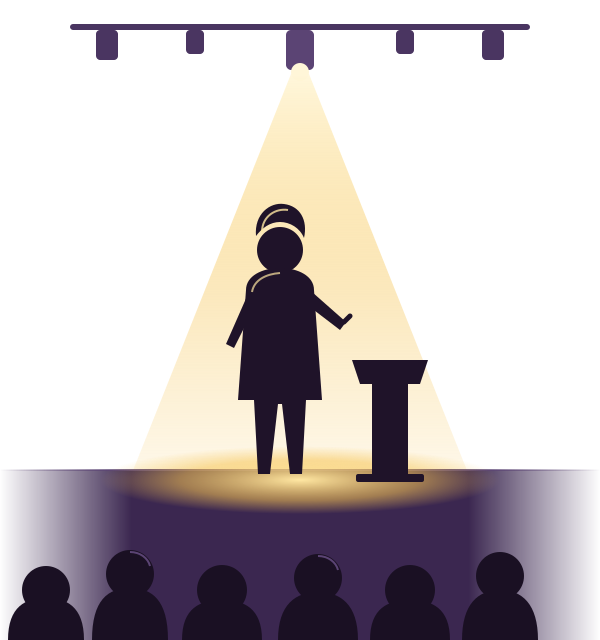
Illustration: a speaker standing in a single spotlight beside a lectern, with the audience in silhouette

She is a researcher first. Every story on stage comes from a decision she studied, and she will tell you which ones went badly.

Amara trained as a clinical psychologist, then spent nine years running decision audits for hospital trusts: sitting in on handovers, bed meetings and board papers, and writing down who decided what, with which information, and how long it took. Her doctorate is on why experienced teams stop disagreeing out loud.

The books came out of that work. The talks came out of the books, when people who had read them asked her to explain it to the rest of the building.

  • Based inLondon, travelling from Heathrow or St Pancras
  • Speaks inEnglish and French
  • Talks since 2019Around 200, in 23 countries, about a third of them on screen
  • Does not doMotivational talks, after-dinner comedy, or talks on topics she has not researched

Five talks, each built on one question an audience keeps getting wrong

Every talk is adapted on a call with you beforehand, using examples from your sector. The titles stay the same, so you can check what others thought of them.

Decide Twice

Which of your decisions can be undone, and why that should change how long you spend on them.

The talk most organisations book first. Amara shows how much of a leadership team's week goes on reversible choices treated as permanent, and what the few irreversible ones need instead: more information, more dissent, and someone whose job is to argue the other side.

Keynote, 50 minutesAlso given virtually. Best for leadership teams and company-wide events.

The Quiet Veto

Why groups agree to things nobody in the room wanted.

From her doctoral research on surgical teams and executive boards. Where the objection goes when nobody says it, how seniority decides which doubts get voiced, and three meeting rules that bring disagreement back while it is still useful.

Keynote or half-day workshopBest for boards, management teams and clinical leaders.

Who Decided This?

Writing decisions down so that a review two years later is fair to the people who made them.

For organisations that answer to an inquiry, a regulator or the press. What a useful decision record contains, why minutes are not one, and how to tell a bad decision from a bad outcome when you are the one reviewing it.

Keynote, or chairing a panelBest for the public sector, healthcare and regulated industries.
Two books, both about the moment before a decision is made

Published by Harrow & Vane in London and with nine translations between them. Copies can be ordered for your attendees at a discount.

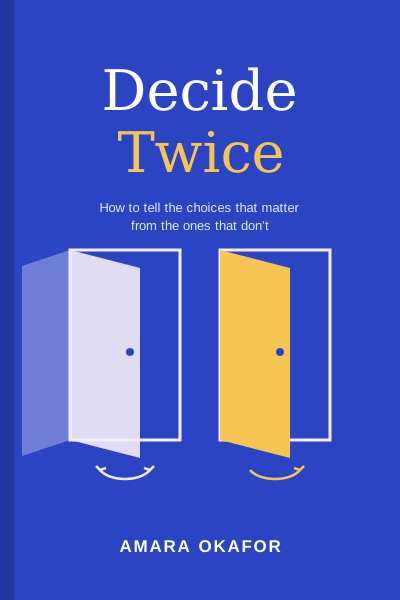
Cover of Decide Twice: two doors on a cobalt background, one swinging both ways, one only one way

Decide Twice

2021, 288 pages

A field guide to separating choices you can reverse from the ones you cannot, with the hospital, airline and retail cases she used to work it out.

About the book
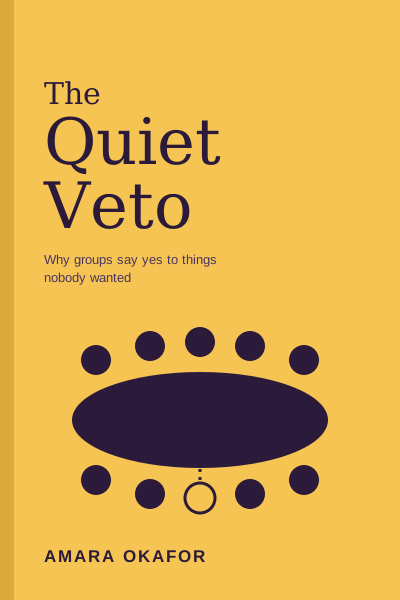
Cover of The Quiet Veto: a meeting table seen from above on a yellow background, with one empty chair

The Quiet Veto

2024, 312 pages

Why groups go along with decisions their members privately doubt, and what a chair can do in the meeting itself to hear the doubt in time.

About the book
Two weeks after the talk, our executive committee started ending meetings by asking who had not spoken. That question has cancelled two projects so far.
Chief operating officer, a Nordic logistics group, after Decide Twice in Oslo

She asked for our last three serious incident reports before the call. Every example on stage came from our own hospitals, anonymised, and nobody in the room found it comfortable. That was what we paid for.

Medical director, an acute hospital trust in the north of England

We booked her for 600 people and she told us on the first call that the workshop would do more for our 30 regional managers. She was right, and it cost us less.

Head of learning, a European insurance company

The fee, before you have to ask

Speaker fees are usually a phone call away. Here are three real-shaped bookings worked out with the same figures the estimator uses, travel included.

BookingFeeTravelLikely total
Keynote in Manchester400 people, one day, rail and one night£8,500–£10,000£350–£700£8,850–£10,700
Workshop in Lisbon30 managers, plus one travel day at £1,000£6,500–£7,500£1,900–£2,800£8,400–£10,300
Virtual keynote for TorontoUp to 1,000 people, from her London studio£4,500–£5,500none£4,500–£5,500

Pounds sterling. UK clients add 20% VAT. Registered charities and state schools pay 40% less on the speaking fee, twice a year.

From the first email to the week after

  1. You send the brief

    Date, place, audience and what you want to change. Rosa replies within two working days with availability and a firm quote.

  2. A call with Amara

    Forty-five minutes, about four weeks out. She asks for recent examples from your organisation and tells you if another format would serve you better.

  3. The day

    She arrives the evening before for in-person talks, sits in on the session before hers, and stays for questions and the book table.

  4. The follow-up

    A two-page note for the organiser within a week: what the room asked, what it pushed back on, and one thing worth trying first.