A cutting board you’ll still be oiling twenty years from now.
End-grain and edge-grain boards, spoons and serving planks, glued up twelve at a time in Asheville, North Carolina from maple, walnut and cherry milled within 90 miles of the shop.
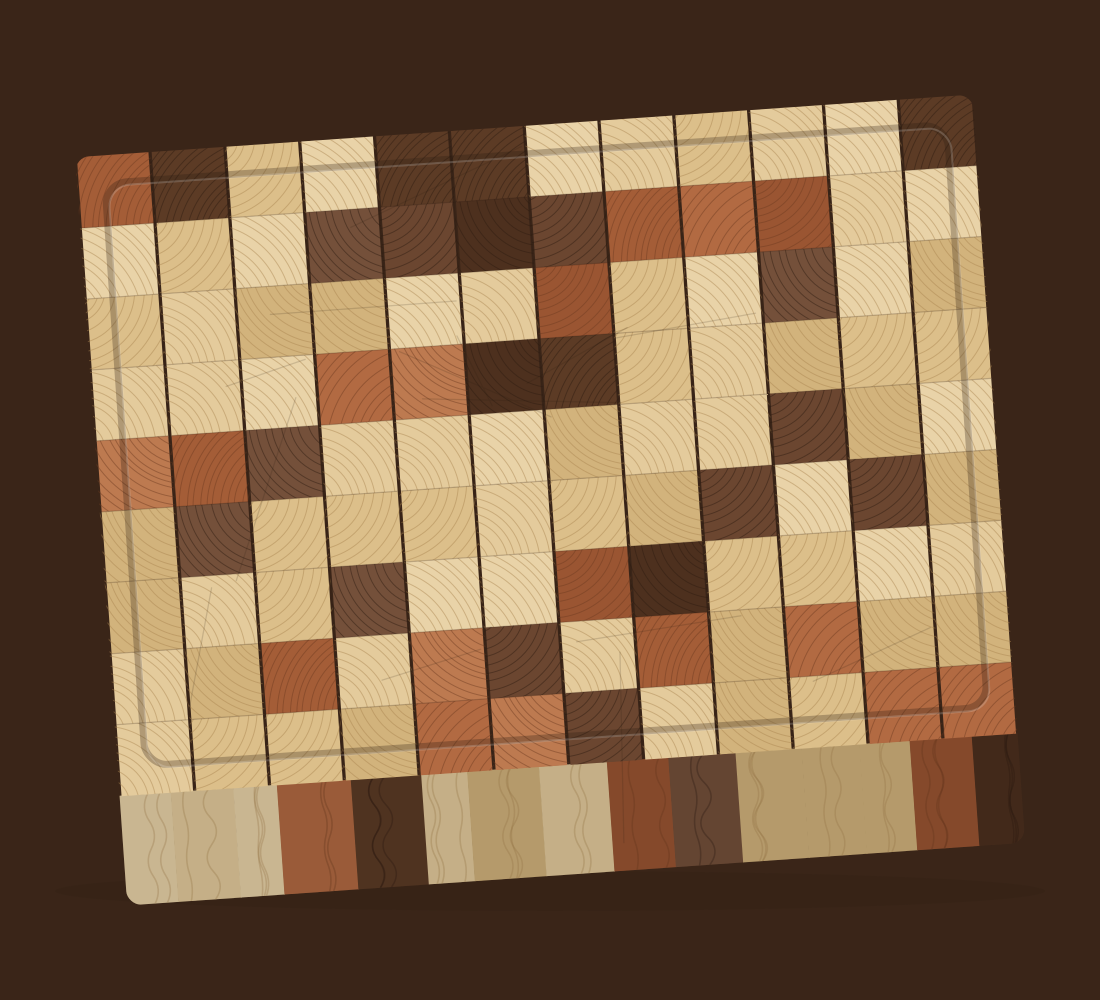
- Batch
- 41, board 7 of 12
- Wood
- maple, cherry, walnut
- Glue-ups
- two, three days apart
- Oil
- four coats, four days
- Signed
- Ruth Hollis
Off the clamps this month
Each batch is twelve boards. When one sells out it stays sold out until the next glue-up dries, usually about three weeks.
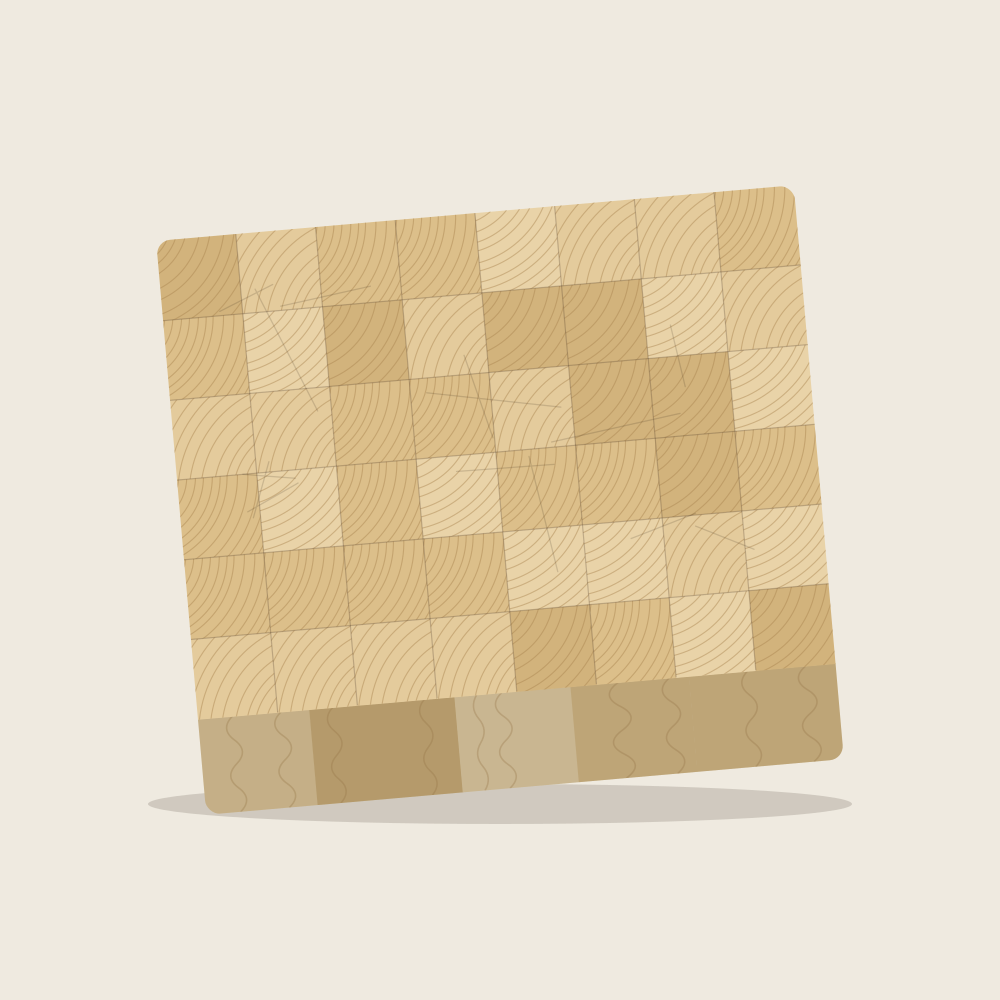
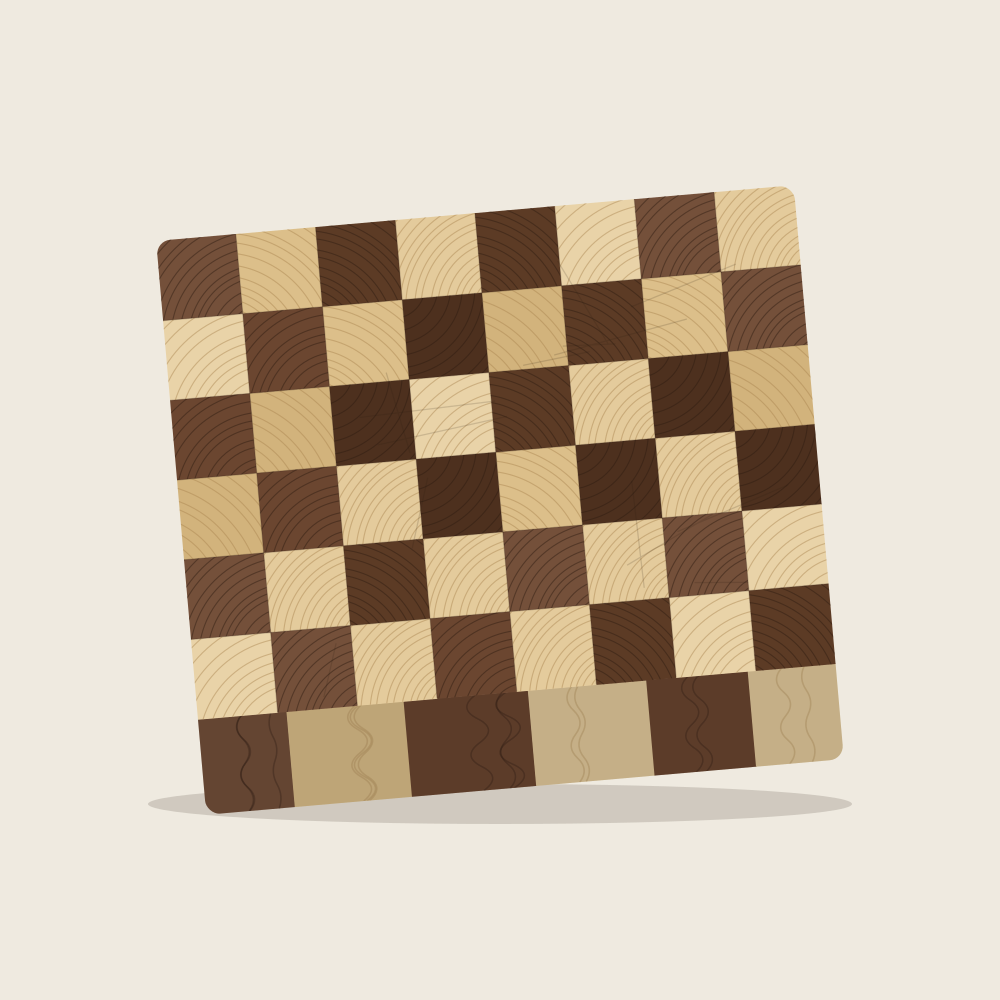
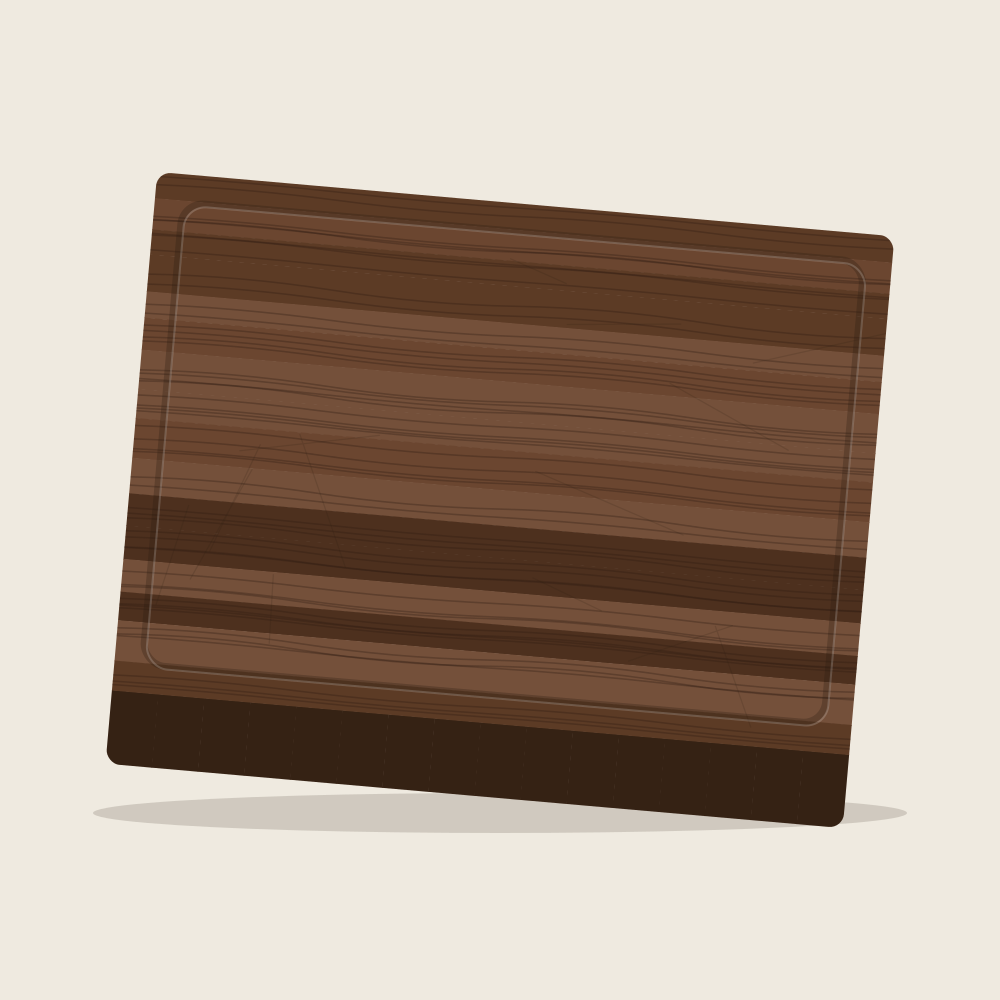
Edge grain or end grain: what the extra $117 buys
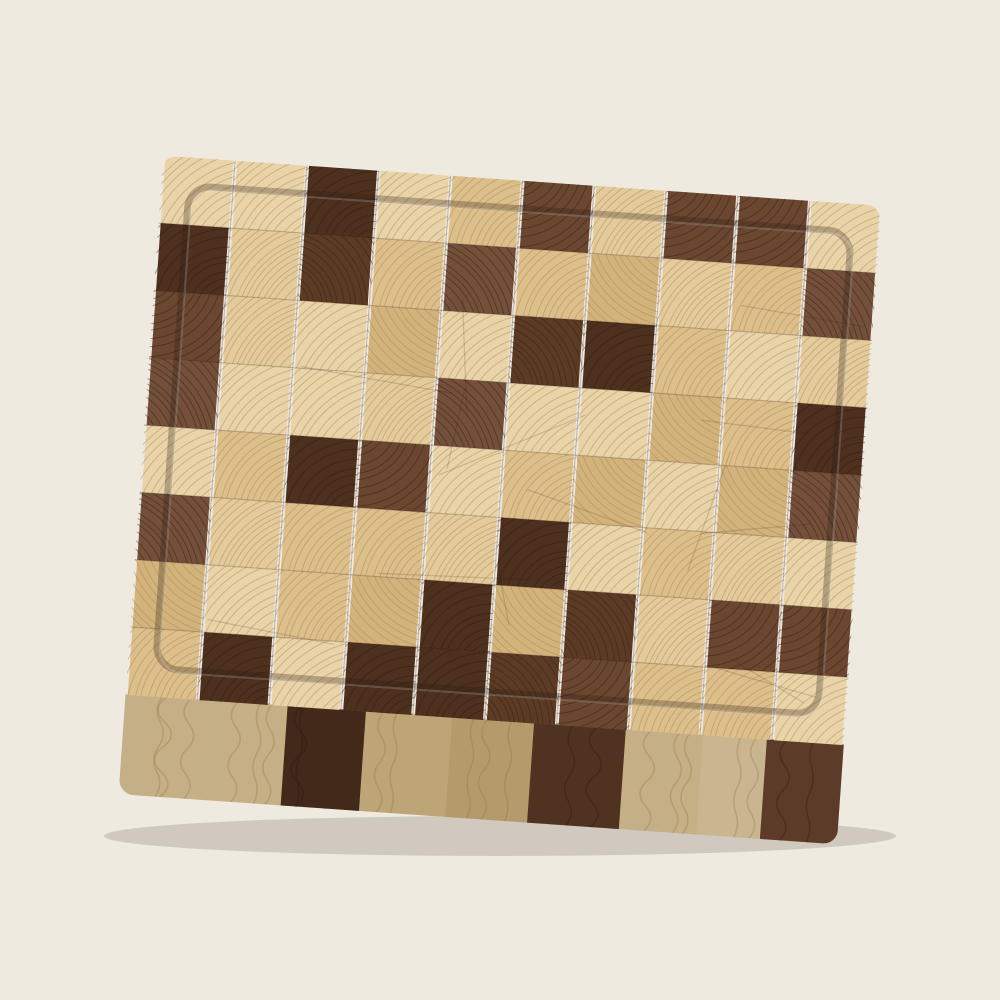
Same maple, same size, same mill. The difference is which way the fibres face your knife.
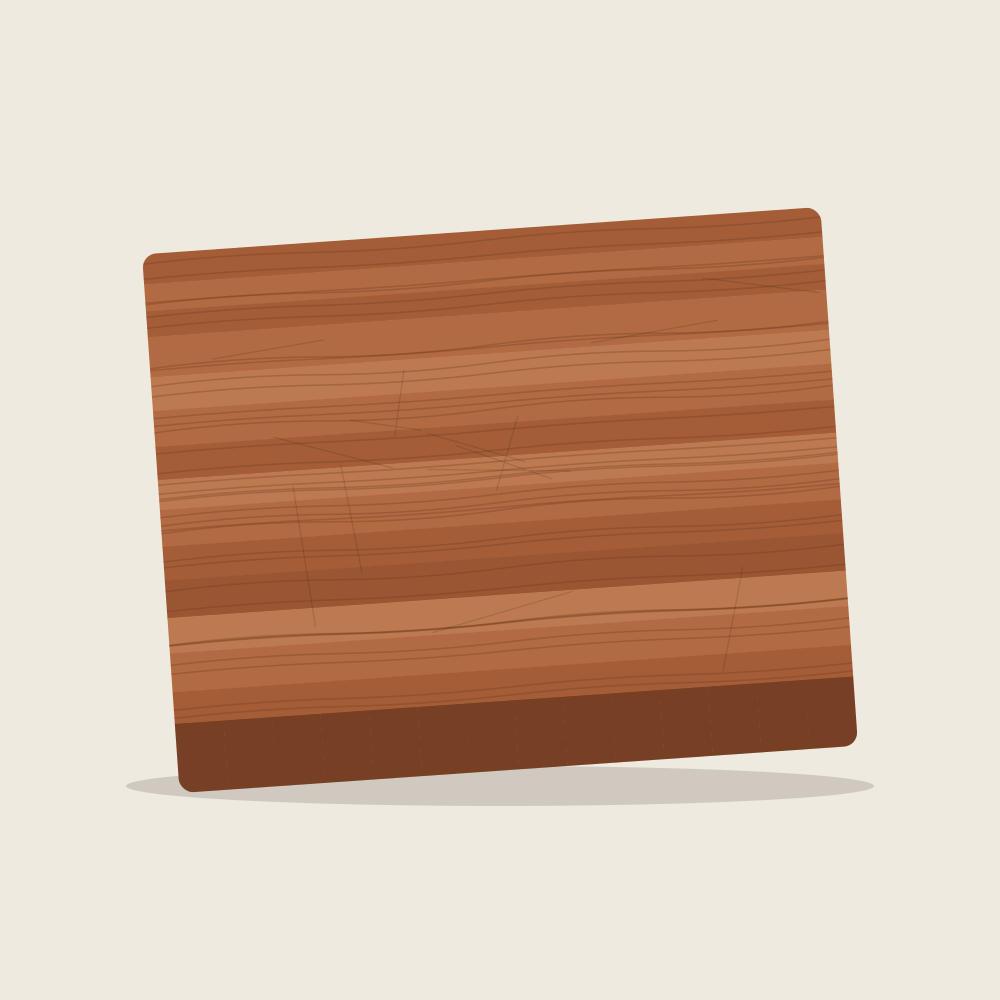
Edge grain
Medium 16 × 11 in, $98
- The knife
- Cuts across long fibres. Fine for a German chef’s knife; a thin Japanese edge dulls a little faster.
- Weight
- 5.6 lb, easy to carry to the sink twice a day.
- Knife marks
- Visible within months. Sand them out every few years, or call them character.
- Oil
- Every 28 days with daily use.
End grain
Medium 16 × 12 in, $215
- The knife
- Slips between fibres standing on end. The edge stays sharp noticeably longer, most of all on hard Japanese steel.
- Weight
- 8.6 lb. Heavy enough that it tends to live on the counter.
- Knife marks
- Shallow cuts close back up. After a year it still looks close to new.
- Oil
- Weekly in the first month, then every 21 days.
If you mostly slice bread, cheese and the odd onion with a Western knife, buy edge grain and spend the difference on a good knife. Most of that $117 is four extra hours at the bench, and our journal has the arithmetic.
Six questions, one board, and sometimes the cheaper one
The picker asks how deep your counter is, how much of it you can clear, what you chop and how you wash up. It checks the board against your space before you pay for it, and when the answer is “not wood” it says that too.
Newest in the shop
Spoons and paddles come from the cherry and walnut offcuts the boards leave behind.
Eleven days from rough lumber to the box
That is an end-grain board. An edge-grain one skips the crosscut and the second glue-up, and is ready in eight.
- Days 1–2
Rip and glue
Rough maple ripped into strips, grain alternated, clamped overnight.
- Day 3
Crosscut
The panel is cut across the grain into rows.
- Day 4
Turn and re-glue
Each row turned on end, staggered into a checker.
- Day 5
Flatten
Slowest hour of the build.
- Days 6–9
Oil, one coat a day
Four coats of mineral oil, each left overnight to soak into the open ends of the fibres before the next goes on. Most shops do one.
- Days 10–11
Butter, sign, box
Board butter buffed in, the maker signs and dates the underside.
From people who use them
I emailed to order the large end-grain. Ruth asked how deep my counter was, then talked me down to the medium. It fits exactly between the stove and the sink, and I saved eighty dollars.
Four years of daily onions on the walnut checkerboard. I sanded it once last spring and it looked new.
A glue line opened after my roommate ran it through the dishwasher. They repaired it anyway and told me, kindly, not to let it happen twice.
Come and lift one before you buy it
The workshop is in the River Arts District, two doors from the rail line. On open-shop Saturdays there is usually a glue-up in the clamps, and you can stand on the end-grain large to see that it doesn’t move.