A board sized for you, not for the surfer in the poster.
Volume decides how many waves you catch. Tell us your weight, how often you get in the water and the waves you ride, and we’ll show you which boards on our rack fit. When none do, we’ll say so.
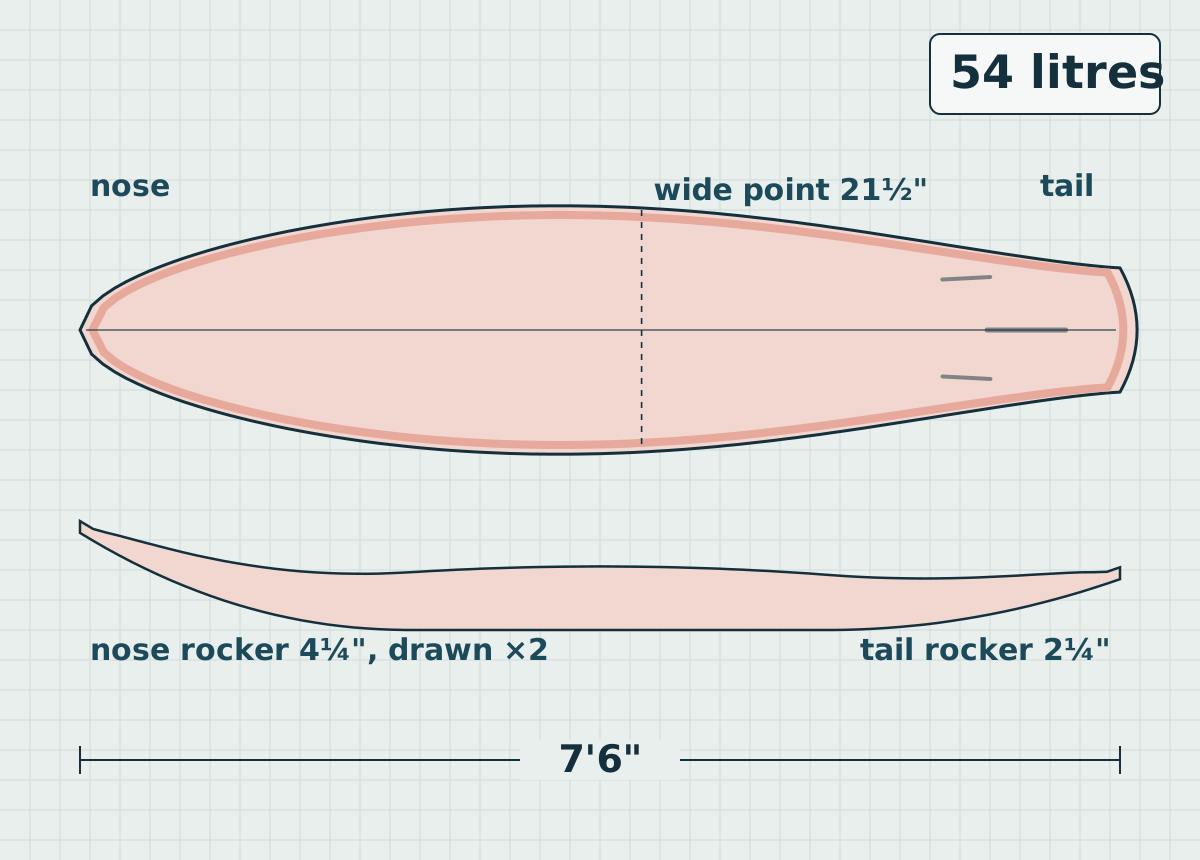
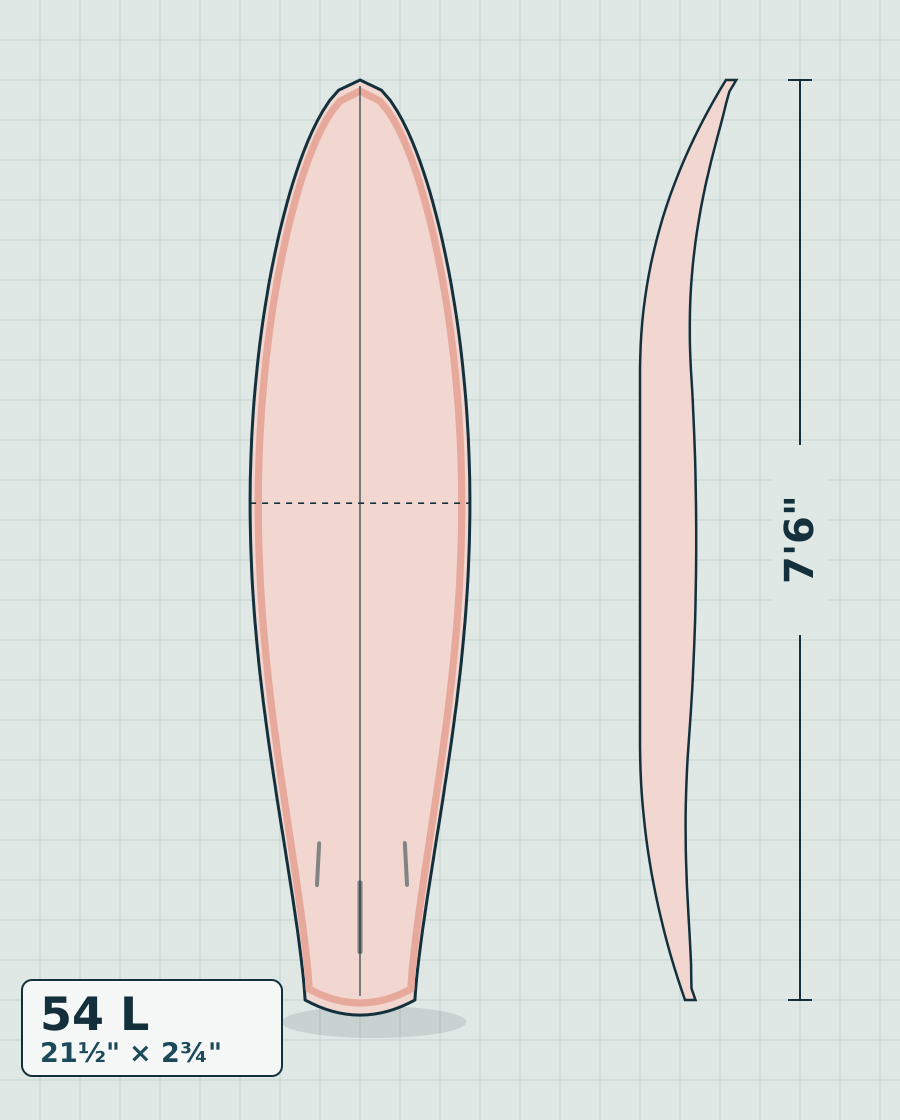
On the drawing board: the Pass Pod 7′6″, 54 litres. Right for a 75 kg surfer who catches unbroken waves but isn’t turning on them yet. The calculator gives that surfer 49 to 60 litres.
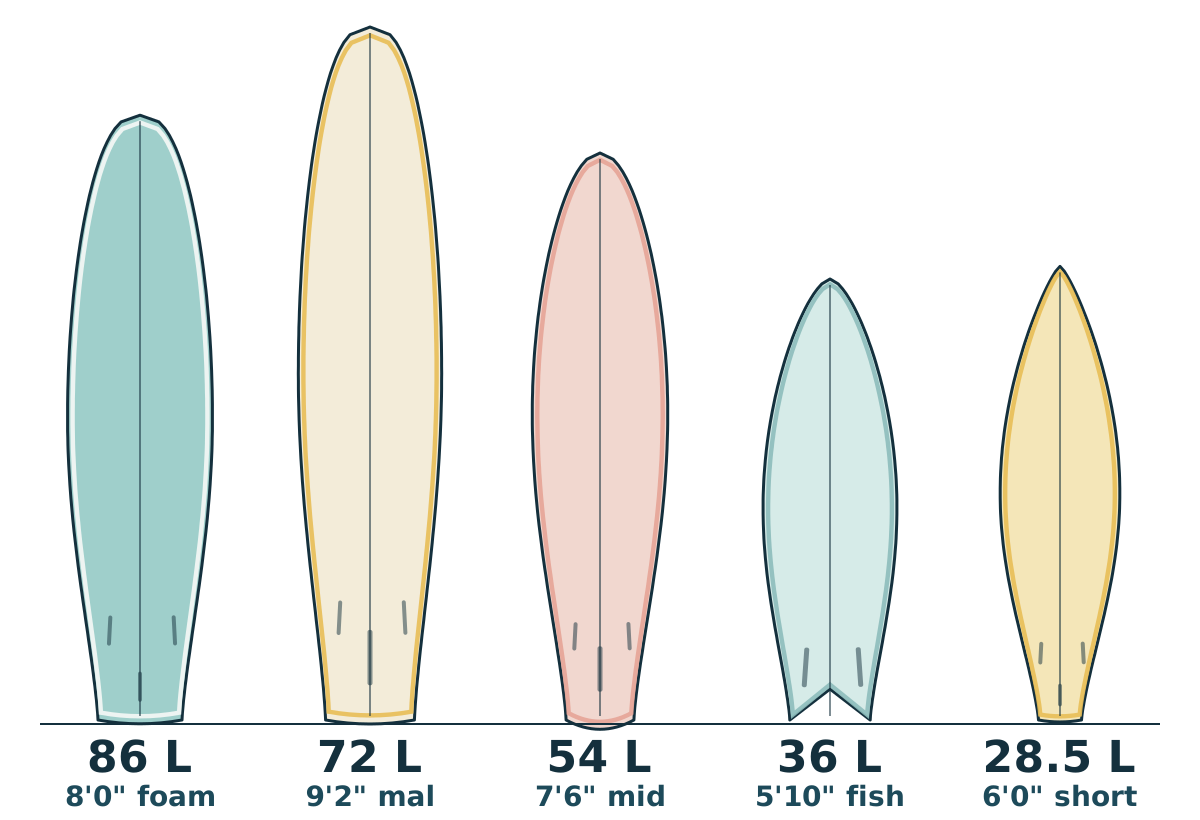
People ask for a length. The number that matters is litres.
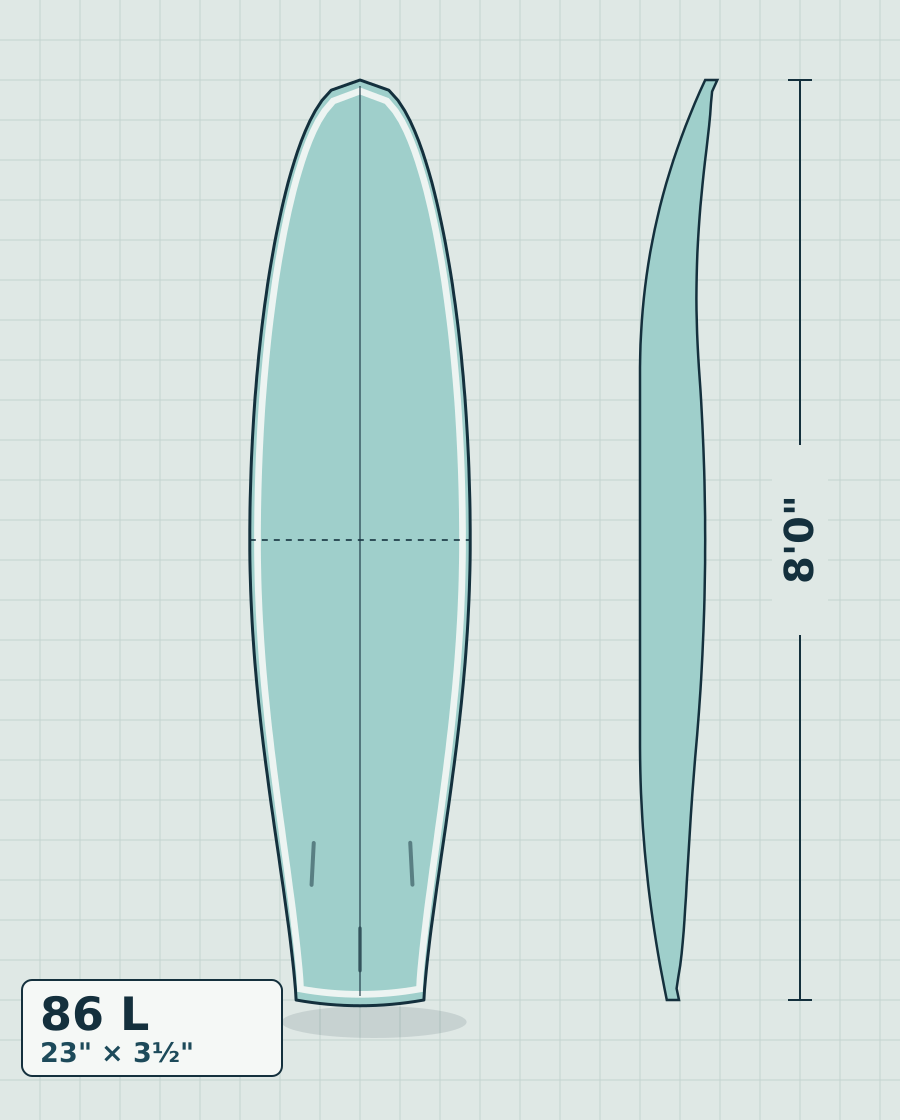
- 86 LThe 8′0″ foam board. Floats a beginner up to about 90 kg, forgives almost everything, and it’s the board most adults should learn on.
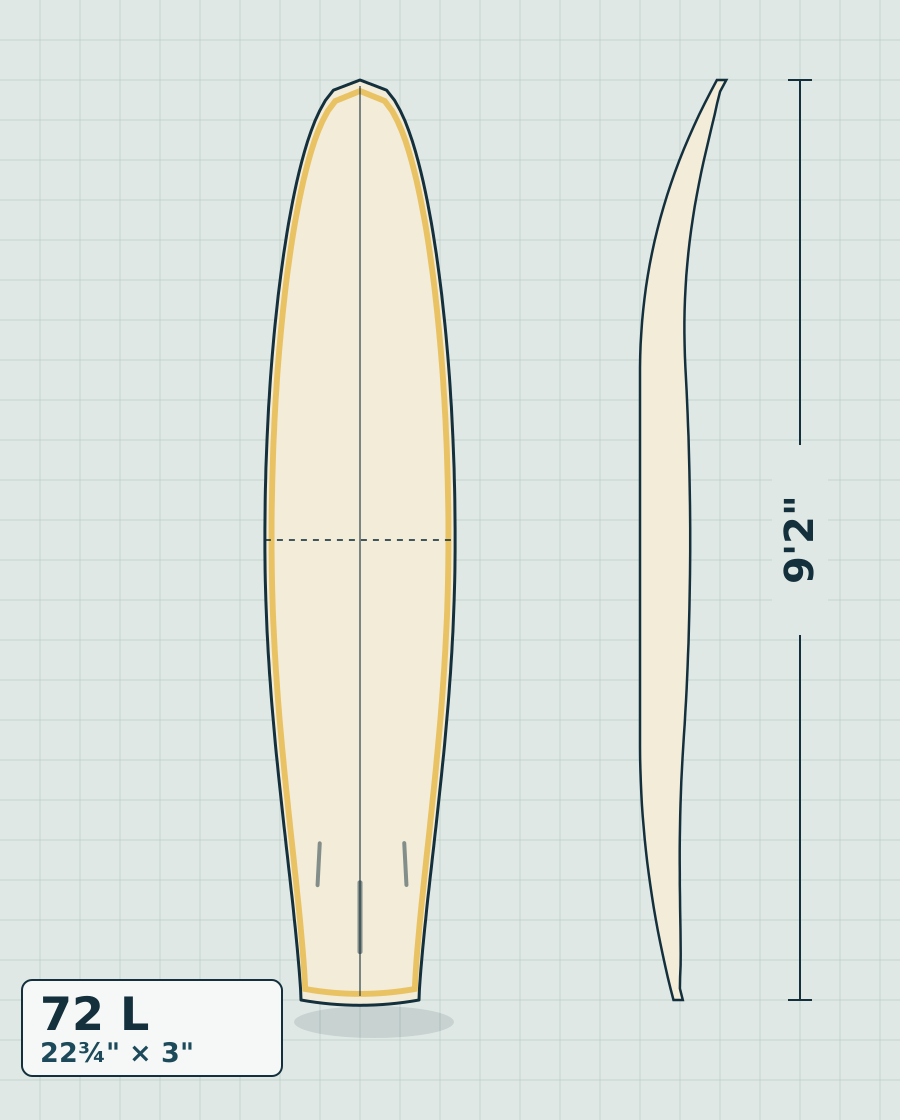
- −18 LBetween the 9′2″ mal and the 7′6″ mid. The mid is 20 inches shorter and still floats a novice.
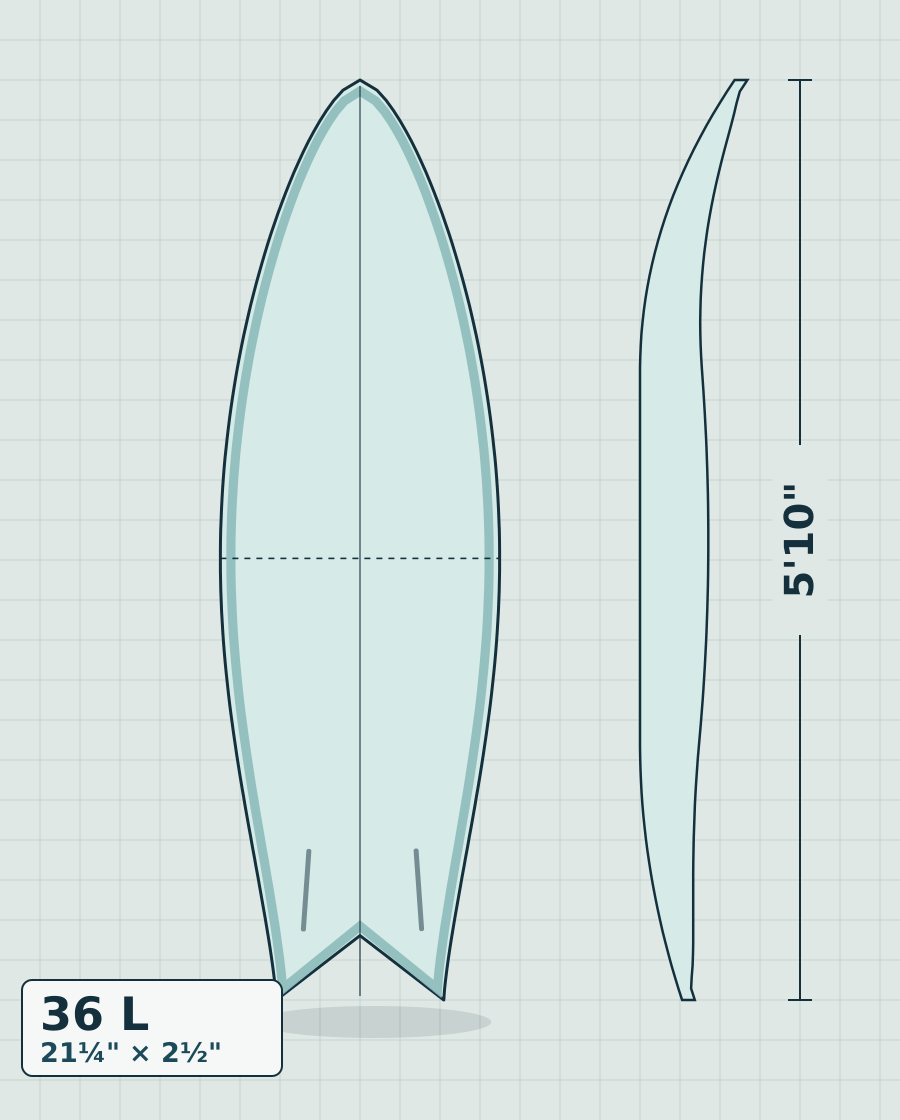
- −7.5 LThe 6′0″ shortboard is 2 inches longer than the 5′10″ fish and floats 7.5 litres less. Length on its own tells you very little.
The boards we put most people on first
Big, stable and easy to paddle. You’ll ride any of these for longer than you expect.
What the water does here, month by month
Water temperature, average swell height and the usual wave period. These are typical figures, rounded, and any given week can be well off them. The coloured line under each month is the suit most people wear.
Swipe the chart sideways for July to December.
- 25° 8 s Jan
- 26° 9 s Feb
- 25° 9 s Mar
- 24° 10 s Apr
- 22° 11 s May
- 21° 12 s Jun
- 20° 12 s Jul
- 19° 12 s Aug
- 20° 11 s Sep
- 21° 10 s Oct
- 22° 9 s Nov
- 24° 8 s Dec
Tap, point at or tab to a month to read it out in full.
Five months, no wetsuit
December to April the water sits at 24°C or above. A rash vest and sunscreen are the whole kit.
The longer lines in winter
From June the swell comes from storms far to the south. Longer period means more energy per wave, so a 1.5 m day in July surfs bigger than one in January.
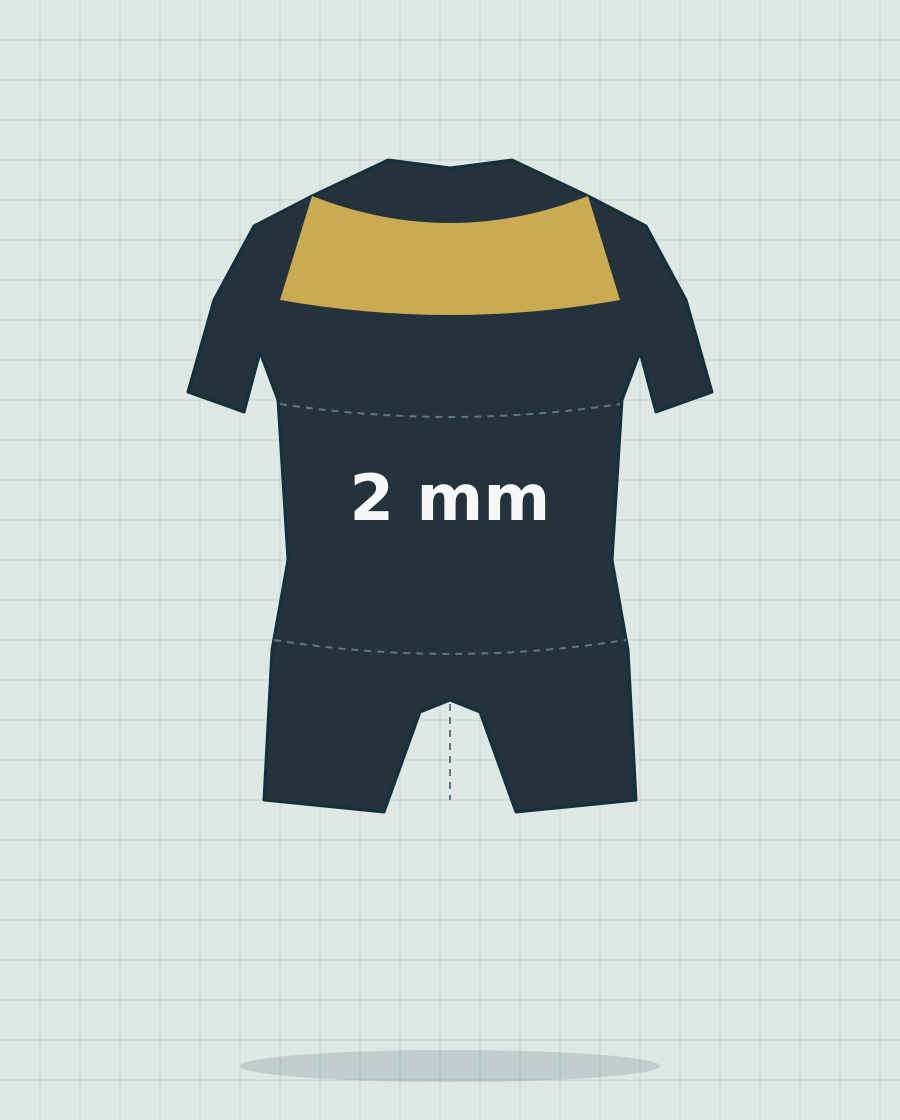
A 3/2 covers the cold months
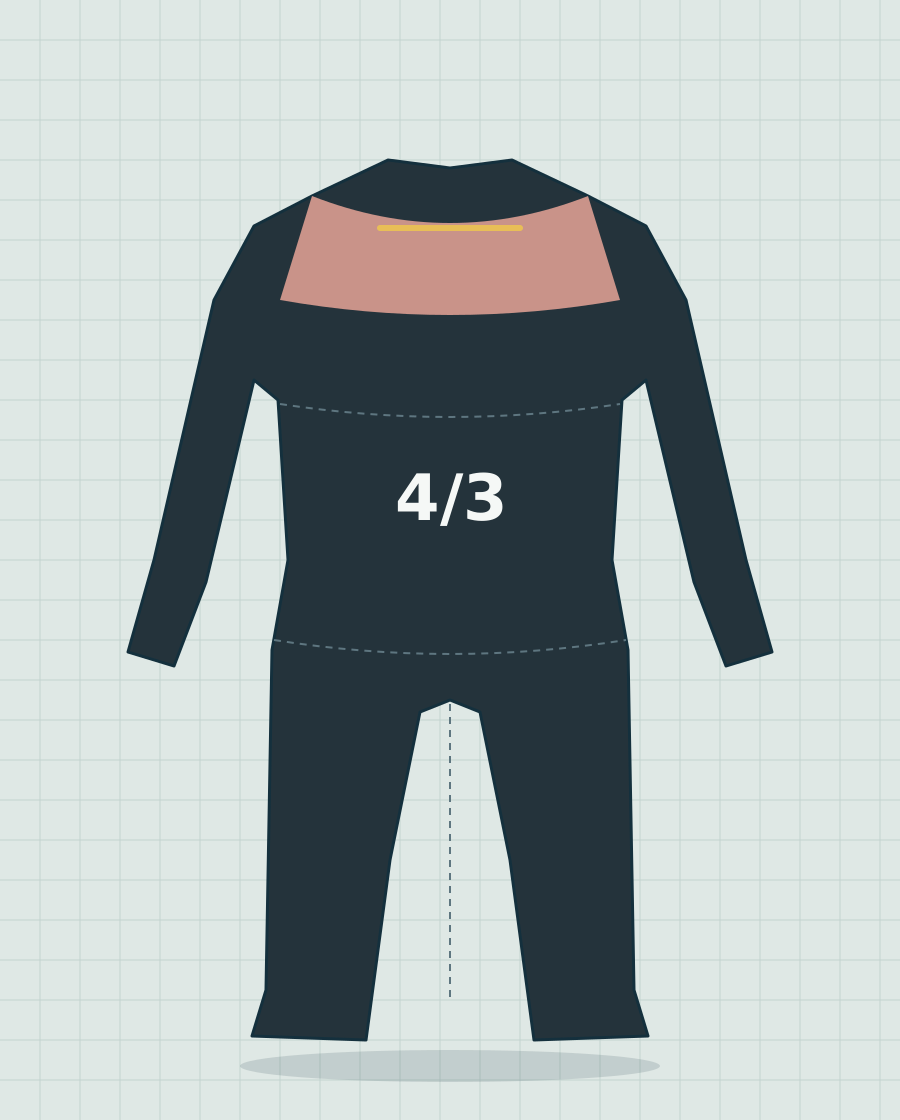
June to October the water is 19–21°C. If you feel the cold, the wetsuit guide will move you up to a 4/3.
New in the shop
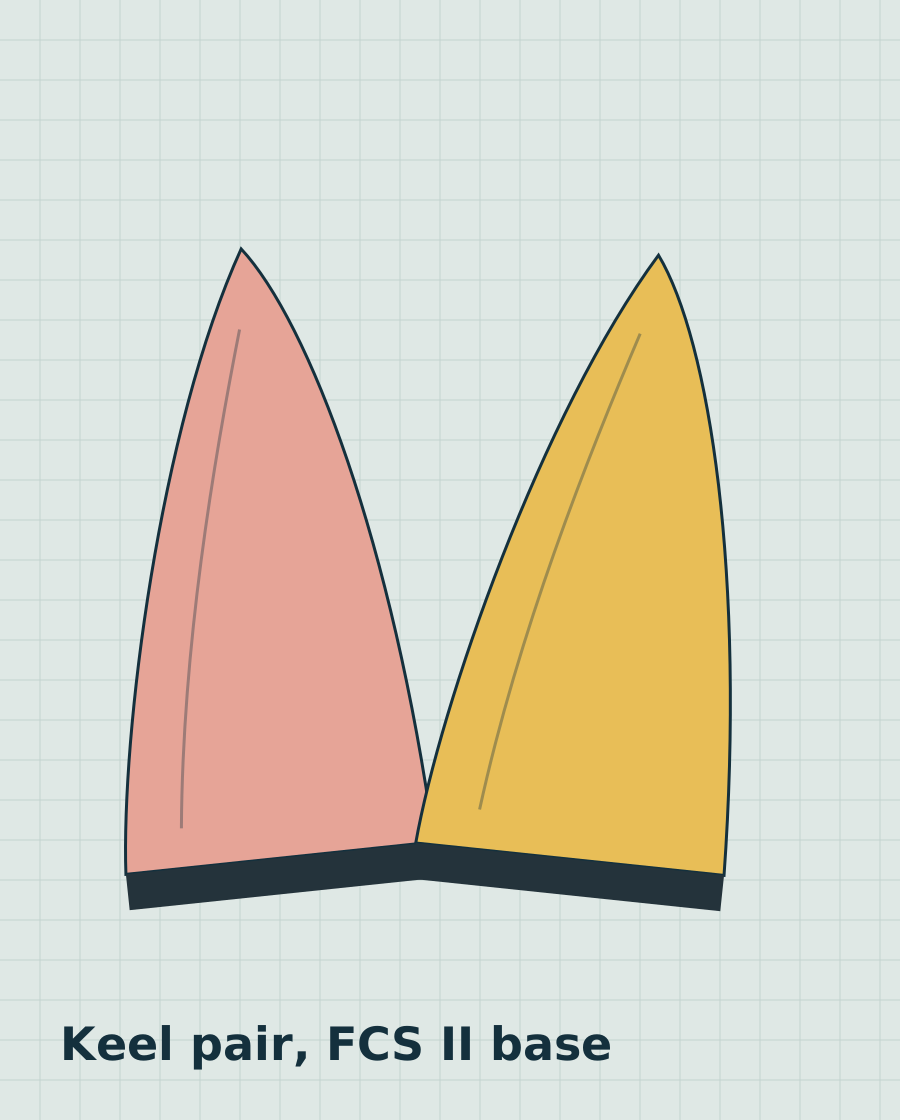
Wetsuits, fins and leashes as well as boards. Everything here is in the back room, ready to post or pick up.
Three sales we’ll try to talk you out of
They cost us money each time. We still think they’re the right advice.
A shortboard as your first board
It looks like the board in the videos and it floats a third of what you need. You’ll spend the season paddling for waves that go past without you.
A 4/3 for Byron in summer
From December to April the water is 24°C or warmer. A thick suit in that water is a good way to overheat on the paddle out.
The wetsuit one size up, because it’s easier to get on
A loose suit lets cold water flush through every time you duck-dive. It should be hard work to pull on and feel snug everywhere when it’s dry.
Hire it before you buy it
Any board on the rack is A$40 a day. Buy the same board within seven days and we take that day off the price. Hire, repairs and returns